
How Do You Write a Listing That Actually Sells?
Part 3 of The Complete Seller's Guide
Buyers decide in the first three seconds whether your listing is worth their time.
Your home is ready. Your price is right. Now the listing has to do the heavy lifting. The description, the photos, the syndication, the timing. Get this right and your showing calendar fills up in the first weekend. Get it wrong and even a perfectly priced home sits.
This is Part 3 of our 7-part Complete Seller's Guide. Part 1 prepped the home. Part 2 set the price. Part 3 is how you turn both of those into showings.
Most listings fail at the same place: they read like a tax assessment. Square footage, number of bathrooms, year built. Accurate. Useless. A good listing sells a life, not a spec sheet. Here is how to build one.
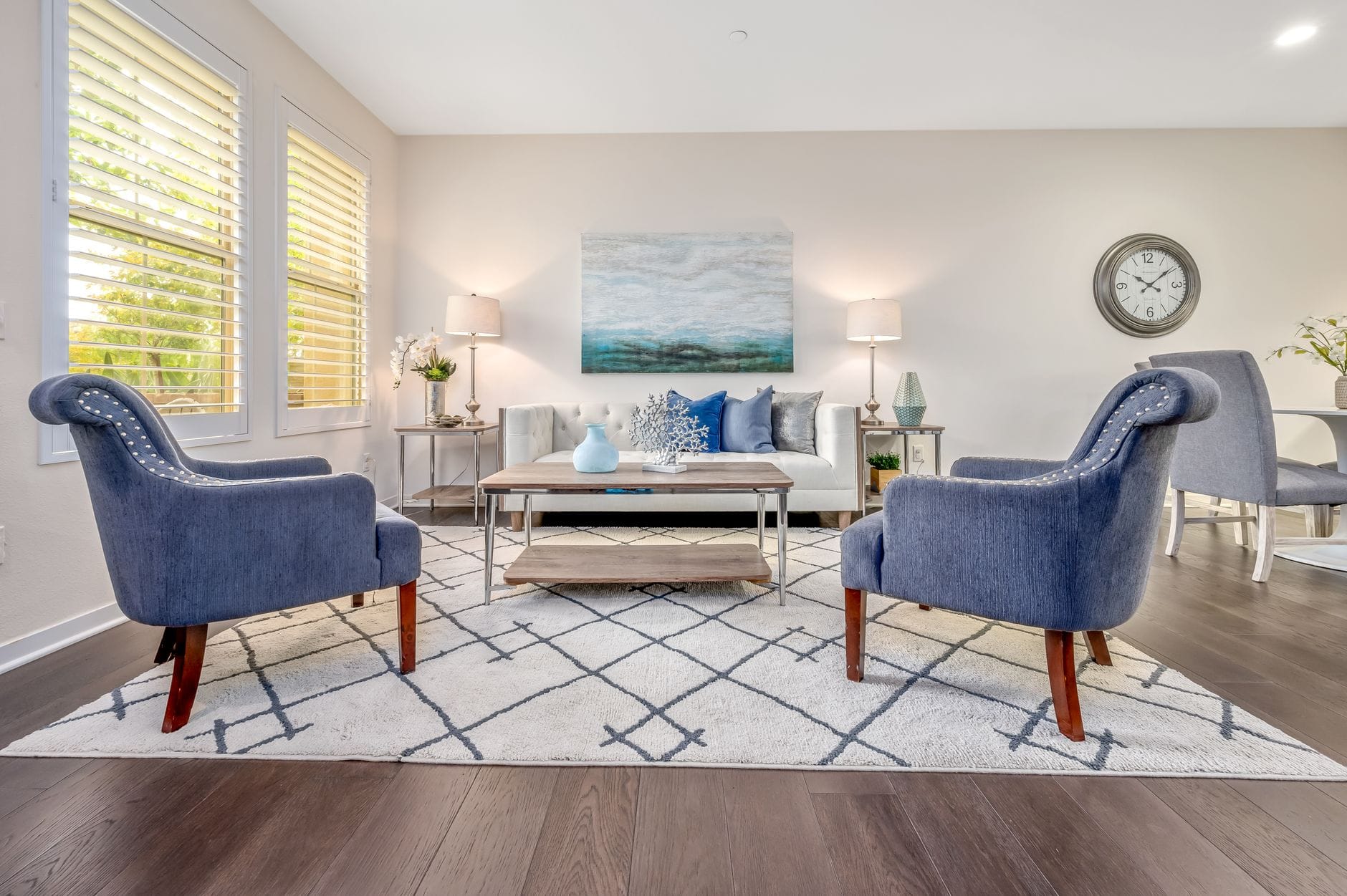
Photos Do 80 Percent of the Work
Before anyone reads a word, they see the photos.
Listings with professional-quality photos get more views, more saves, and more showings. Homes with high-quality photos sell faster and for more money than comparable homes with weak photos. The photo is the hook. The description is the close.
If you can hire a real estate photographer, do it. A typical package runs $150 to $300 in most markets and includes 25 to 40 photos, drone exterior shots, and often a floor plan or a short video walkthrough. On a $400,000 home, that is the best-spent $250 in the entire transaction.
If you cannot hire out, shoot it yourself with this checklist:
- Shoot during the day with every light on. Open blinds, turn on every lamp, and shoot on a bright but not blindingly sunny day.
- Use a real camera or a recent phone. Phones from the last three years are good enough. Older ones are not.
- Wide-angle matters. Stand in the corner of the room, not the middle. Most phones have a 0.5x ultra-wide lens. Use it.
- Declutter for the photo, then declutter again. What looks minimal in person looks cluttered in a photo.
- Eye level, straight on. Hold the camera at chest height, keep vertical lines vertical, and avoid angling up or down.
- Shoot every room, then pick the best 20 to 25. Buyers want to see the whole house, but you are choosing the hero shots.
The exterior shot is the single most important photo. It is the one buyers see in search results. If you get nothing else right, get the front of the house right.
The Description That Converts
Buyers are not reading. They are scanning. Your description has about six seconds before they scroll to the next listing.
The opening line is the whole game. Do not open with "Beautiful 3 bedroom 2 bath home in great neighborhood." Open with the thing that makes this house worth a Saturday tour.
Good opening lines:
- "Wake up to morning light pouring through the back wall of windows that overlooks the oak grove."
- "Renovated 1952 cottage with original hardwoods, a new kitchen, and a fenced yard big enough for a swing set."
- "Two blocks from the Garden District, walkable to three coffee shops, and quieter than you would guess."
Then, in the body:
- Lead with the three best features. Not every feature. Three.
- Short paragraphs. Four sentences max.
- Use concrete details, not adjectives. "New HVAC installed 2024" beats "updated."
- Mention the neighborhood. Schools, parks, commutes, walkability. Buyers are buying a location as much as a house.
- End with a clear call. "Showings by appointment, weekends preferred" or "Open house Saturday 1-3."
Do not write about yourself. "We've loved raising our family here" is for the emotional sign-off after the deal closes. In the listing, it distracts from the house.
Where Your Listing Needs to Live
A listing only on your own site is a listing nobody sees. The goal is broad syndication.
The major platforms buyers actually use:
- Zillow. The biggest by volume. Free to list as a FSBO through their "For Sale by Owner" option.
- Realtor.com. Pulls from MLS feeds primarily. To get on it, you need MLS access.
- Redfin. Pulls from MLS. Same rule.
- Trulia. Owned by Zillow and mirrors Zillow's inventory automatically.
- Facebook Marketplace. Free, high local traffic, weak on serious buyers but real.
- Craigslist. Free, works better in some markets than others.
The MLS is the backbone. Even if you are selling independently, getting on MLS dramatically expands reach because it syndicates to hundreds of buyer-side sites automatically. Flat-fee MLS services typically charge $99 to $499 to list your home on MLS without signing a full listing agreement. That investment pays for itself the moment the first buyer's agent sees your listing alongside the full-service listings.
Platforms like Ziplyst℠ are designed to handle the syndication step so your listing lands on the sites buyers actually check, without you managing five different logins.
Timing Your Launch
When you list matters almost as much as how you list.
The sweet spot for most markets is Thursday afternoon to Friday morning. The reason is the weekend. Buyers do their scrolling on Thursday evenings and Friday nights, and the most motivated ones line up Saturday and Sunday showings. Listing on a Thursday puts you in front of the weekend shoppers while the listing is still marked "New."
The "New" tag matters. Most platforms flag listings as "New" for the first 24 to 72 hours, which sends them to the top of filtered searches. Burning that tag on a Tuesday afternoon when nobody is searching is wasted visibility.
Avoid listing on Mondays. Avoid listing on major holiday weekends. Avoid listing the week between Christmas and New Year. Your listing gets the most eyes in the first two weeks. Spend them well.
Wrapping Up
The listing is the bridge between the home you prepared and the showing that becomes an offer. Treat it like the marketing document it is, not the summary it feels like.
Independent sellers who invest in the photos, write a real description, and time the launch right outperform the ones who upload five phone pictures and a paragraph of specs. The listing is not where you summarize the house. It is where you sell it.
Your Move.
Frequently Asked Questions
How many photos should my listing have?
Between 20 and 30. Fewer than 15 makes the listing feel thin. More than 40 pads it with weak shots that dilute the strong ones. Pick your best work.
Do I need a drone shot?
Only if your home has a feature that photographs better from above: a large lot, a pool, water frontage, a wooded backyard, or a notable roofline. For most suburban homes, a clean front-exterior shot from the street is enough.
Can I list on the MLS without a real estate license?
Not directly. You need a flat-fee MLS service, which acts as the licensed intermediary that posts your listing for a one-time fee. Most services charge $99 to $499. The service does not represent you in the transaction. It only provides the MLS posting.
How long should my listing description be?
Between 150 and 300 words. Short enough to read in under a minute. Long enough to cover the three best features, the neighborhood, and the call to action.
What day of the week is best to launch?
Thursday afternoon or Friday morning for most markets. This captures weekend buyers while your listing still has the "New" tag on major platforms. Avoid Mondays, major holiday weekends, and the last two weeks of December.
Should I include video or a virtual tour?
If your home is over $400,000 or has a complex layout, yes. Video and 3D tours improve buyer confidence and reduce wasted showings because remote or out-of-area buyers can pre-qualify the home without visiting.
What is Ziplyst?
Ziplyst is an AI-powered educational platform with a marketplace of tools built for homeowners who want to sell on their own terms.
Up next in Part 4: Your listing is live and the calendar is filling up. Now buyers are coming through the door. We will break down how to run showings that convert, how to read feedback, and how to handle the moment a serious buyer is standing in your living room.
This is educational content, not legal or financial advice. Consult a licensed real estate attorney or financial advisor for guidance specific to your situation.
Ziplyst is a service mark of Ziplyst Inc.